
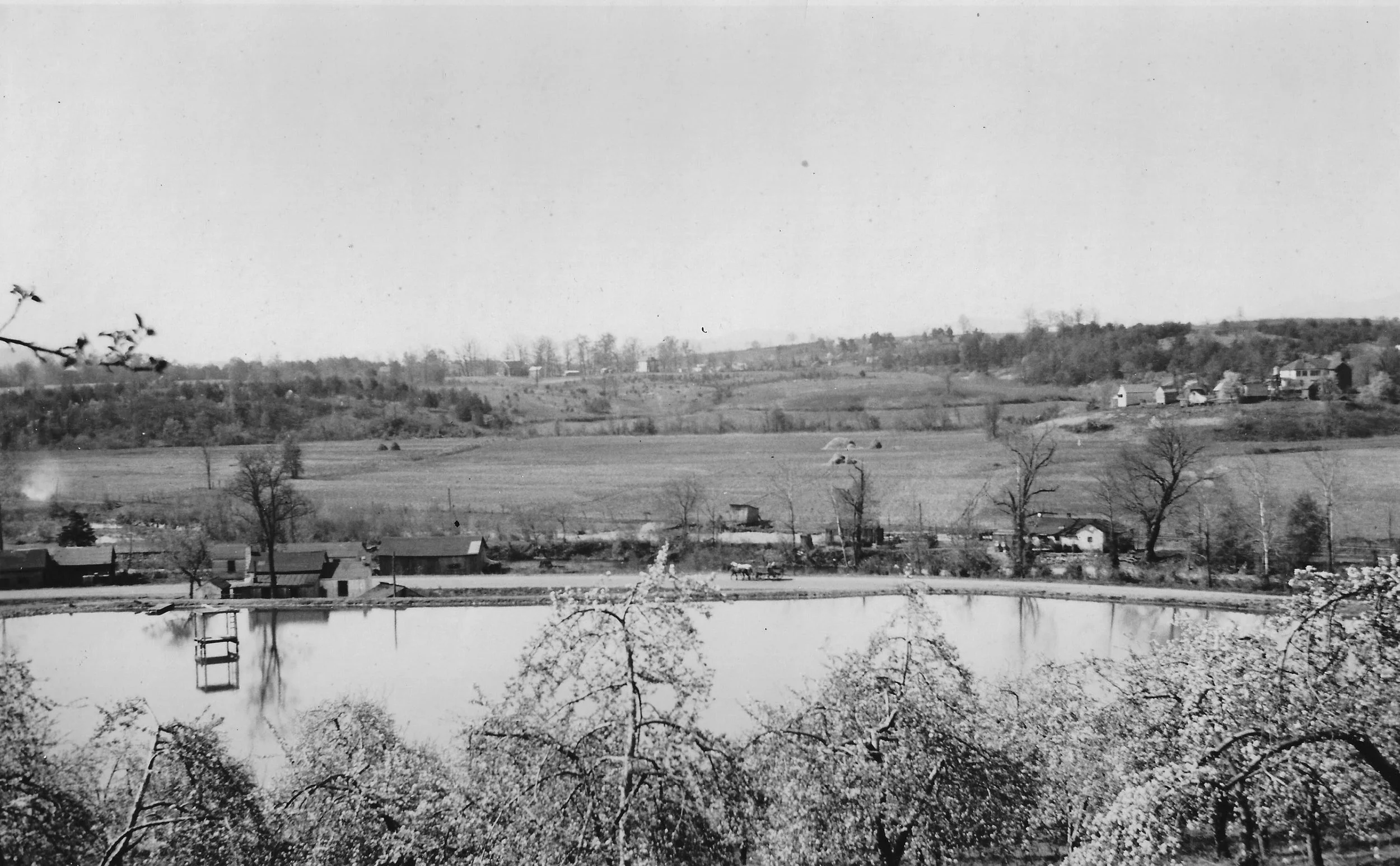
Woodson Mill’s
Historic Role
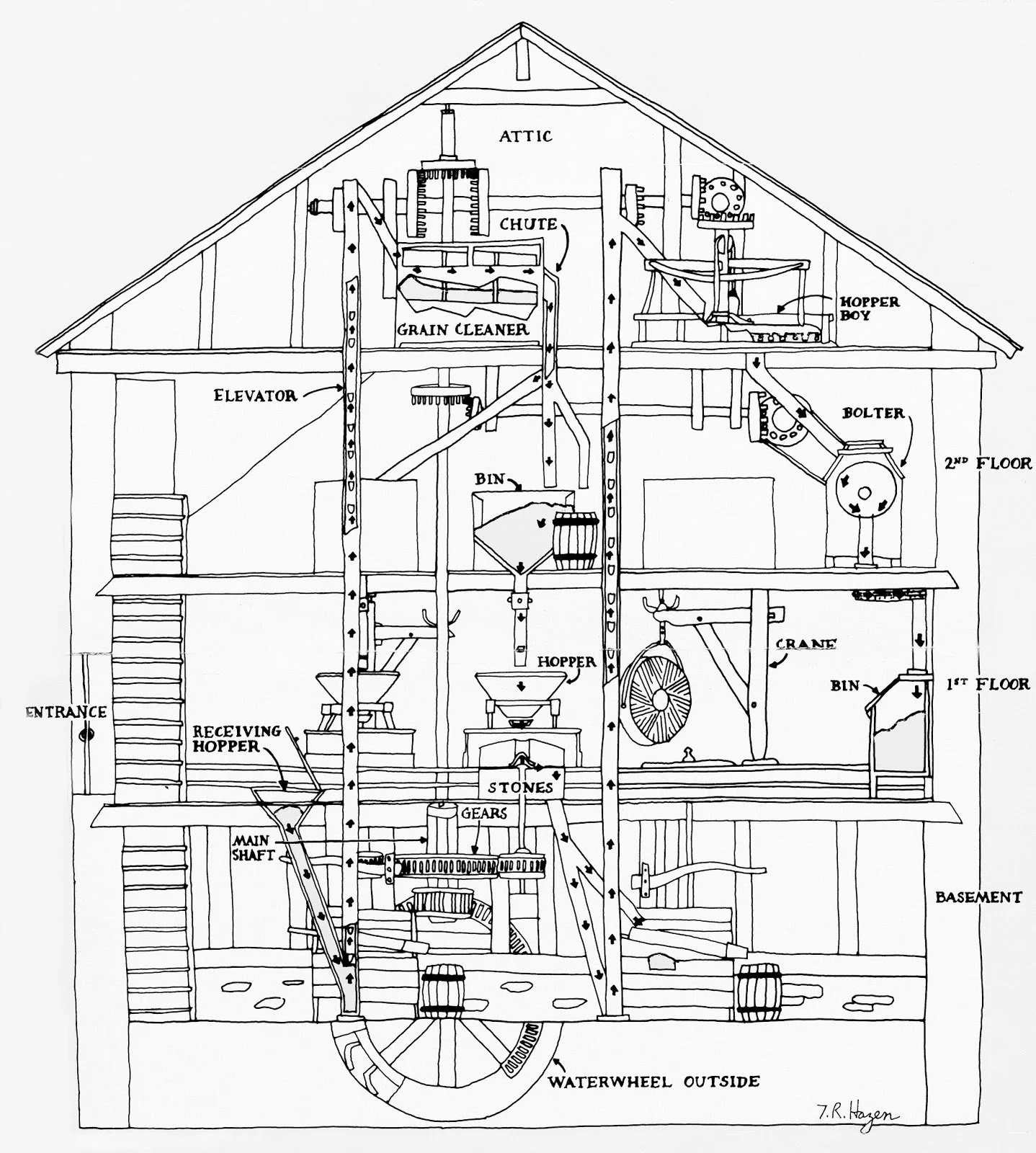
A cross-section showing the Oliver Evans grain processing system at Peirce Mill in Washington DC. Completely powered by the revolving mill wheel, the system cleans and funnels grain to the millstones, then cools and sifts the resulting flour.
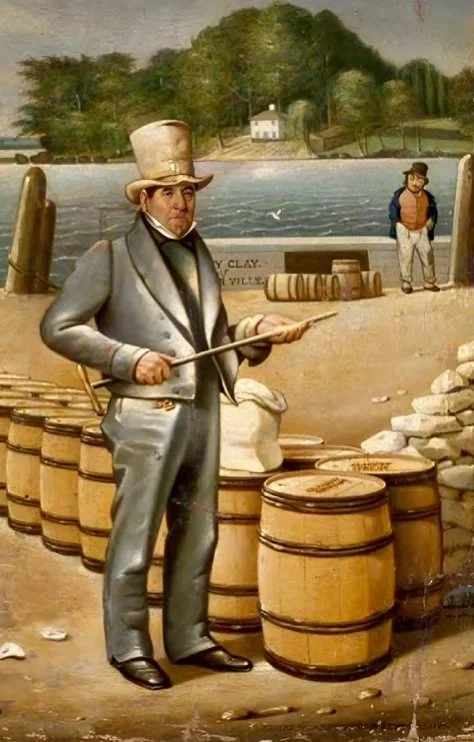
American Innovation; Virginia Grain
Woodson’s Mill, first built in the 1790s, is an operating example of early American innovation and agricultural dynamism. It uses the water-powered grain processing system developed by Delaware inventor Oliver Evans, who received the nation’s third patent for the idea, and demonstrates how labor-saving processes fundamentally altered business enterprises during the Industrial Revolution.
The mill also provides a window into Virginia’s role in the expansion of American agriculture that eventually made the United States a leading global farm product exporter. In the years immediately following American independence, there was unprecedented growth in flour manufacturing. Virginia and nearby states possessed the necessary natural resources of land, climate, and waterpower. Canals and passable roads were under development. Most importantly, world market demand was expanding in Europe, the Caribbean, and South America.
America financed much of its early industrial growth through the export of commodities such as flour (second only to cotton). Most of the flour came from country mills such as Woodson’s. Though it was a comparatively small producer, the history of the mill provides valuable educational lessons about early American commerce, the key role of hydropower, and how agriculture shaped our country.

Mill Revival
Historically, mills stood at country crossroads. Post offices, general stores, blacksmith shops – all of these were common at a mill site, and sometimes an entire village would grow up around the facility. Woodson’s Mill took this one step further, as owner Julian Woodson (1872-1963) was a traditional country doctor who treated patients in his office at the mill.
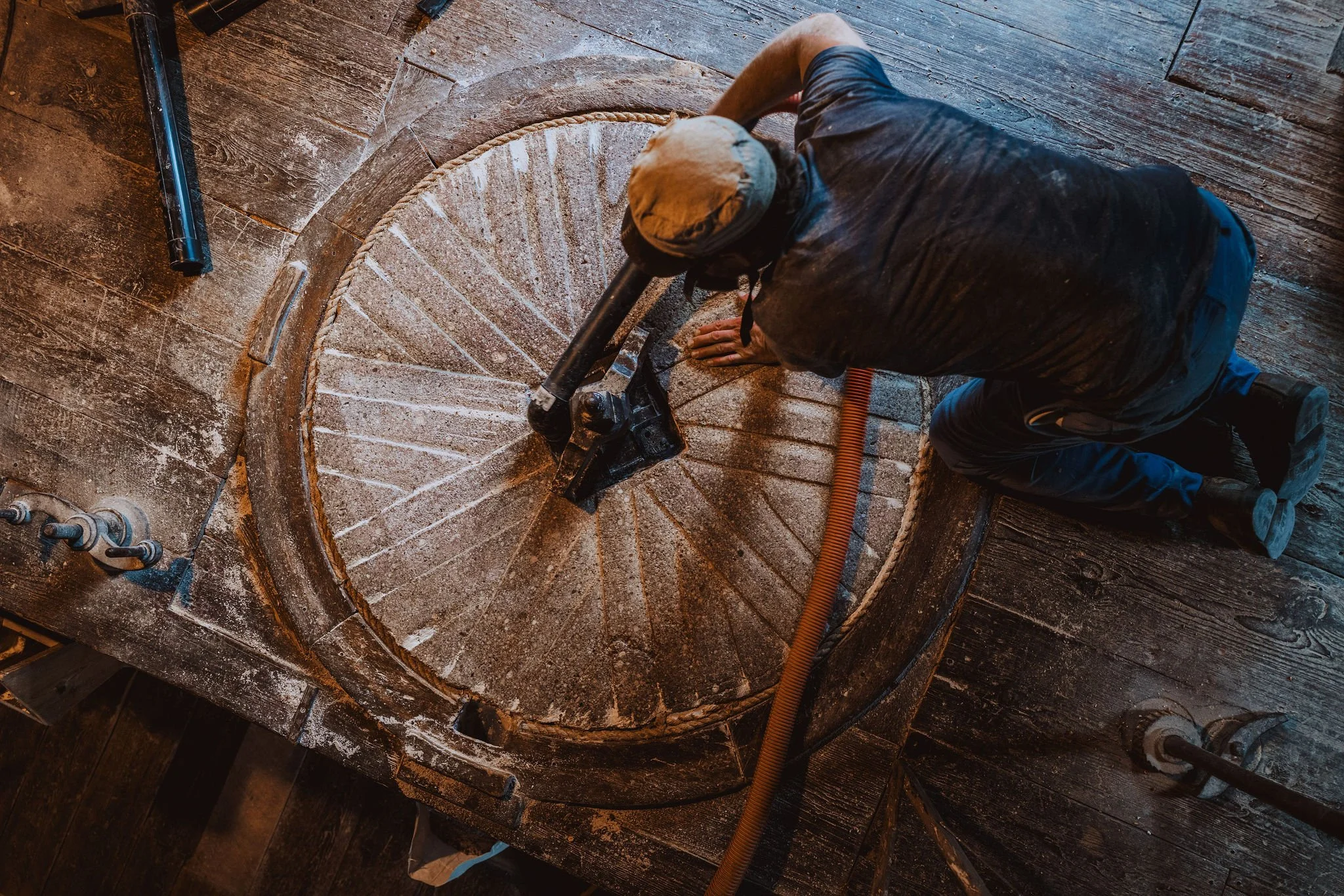
Today, mills can still produce the stone-ground grain products so treasured by commercial and home bakers, but also offer much more:
Education of young people about agriculture, nutrition, hydropower, entrepreneurship. The mill is a working example of renewable energy.
Training of apprentices in preservation trades.
Research and storytelling about local history.
Social events such as square dances and concerts.
Get in touch
Do you have any more questions about Woodson's Mill? Get in touch with our director, Steve Dryden.
Photo credit: justinidephotography.com